
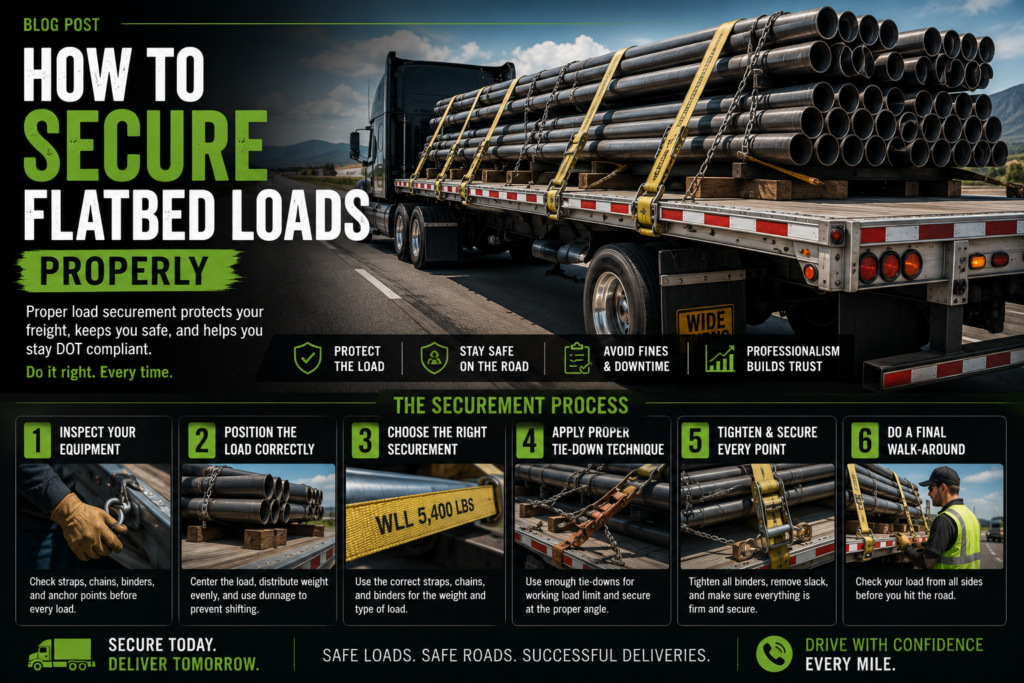
How to Secure Flatbed Loads Properly
Proper load securement is one of the most important responsibilities of every flatbed driver. Whether you’re hauling steel, lumber, machinery, pipe, or construction materials, securing your cargo correctly protects your freight, keeps everyone on the road safe, and helps you remain compliant with FMCSA regulations.
A single loose strap or improperly placed chain can lead to damaged freight, costly fines, out-of-service violations, or even serious accidents.
Here’s a practical guide to securing flatbed loads the right way.
Why Load Securement Matters
Properly secured cargo protects:
- Your safety
- Other motorists
- The customer’s freight
- Your equipment
- Your reputation as a professional driver
Investing a few extra minutes before leaving the shipper can save thousands of dollars in damages and prevent unnecessary delays.
Step 1: Inspect Your Equipment
Before loading, inspect all securement equipment.
Check:
- Ratchet straps
- Chains
- Load binders
- Edge protectors
- Winches
- Anchor points
Replace any damaged or worn equipment immediately.
Step 2: Position the Load Correctly
Good securement starts with proper placement.
Make sure the load is:
- Centered on the trailer
- Evenly distributed
- Balanced from front to rear
- Positioned to comply with axle weight limits
Improper weight distribution affects braking, steering, and tire wear.
Step 3: Choose the Right Securement Method
Different cargo requires different securement.
Examples include:
- Steel coils → Chains
- Pipe → Chains and straps
- Lumber → Heavy-duty straps
- Machinery → Chains and binders
Always use equipment rated for the weight of the load.
Step 4: Protect the Cargo
Sharp edges can quickly damage straps.
Use:
- Corner protectors
- Edge guards
- Dunnage
- Friction mats when necessary
These simple tools extend equipment life and improve cargo stability.
Step 5: Apply Proper Tension
Securement isn’t about making straps “look tight.”
Use enough tension to prevent movement without damaging the cargo.
Avoid:
- Loose binders
- Twisted straps
- Uneven tension
Every securement point should work together to hold the load firmly in place.
Step 6: Perform a Final Walk-Around
Before leaving:
✔ Check every strap
✔ Check every chain
✔ Lock every binder
✔ Inspect edge protectors
✔ Verify trailer lights
✔ Ensure nothing is loose
This final inspection takes only a few minutes but can prevent major problems later.
Recheck During Your Trip
FMCSA regulations require drivers to inspect cargo securement:
- Within the first 50 miles
- Every 150 miles thereafter
- At every change of duty status
Road vibration and weather conditions can loosen securement over time.
Never assume the load is still secure.
Always verify.
Common Mistakes to Avoid
Many violations occur because of preventable errors.
Common mistakes include:
❌ Using damaged straps
❌ Insufficient tie-downs
❌ Loose chains
❌ Ignoring sharp edges
❌ Uneven weight distribution
❌ Skipping required inspections
Professional drivers develop habits that prevent these mistakes before they happen.
Safety Is Good Business
Proper load securement isn’t just about avoiding violations.
It helps:
- Protect valuable freight
- Reduce downtime
- Build customer trust
- Improve CSA scores
- Demonstrate professionalism
Every safe delivery strengthens your reputation.
Final Thoughts
Flatbed hauling requires skill, attention to detail, and a commitment to safety.
Taking the time to inspect equipment, position cargo correctly, use the right securement methods, and perform regular inspections helps ensure every load arrives safely.
Professional drivers know that successful deliveries begin long before the truck starts moving.
Drive Flatbed with Confidence
At TAG Trans Inc., we understand the importance of safety, professionalism, and proper load securement.
We partner with experienced Flatbed Owner Operators and Drivers who take pride in doing the job the right way.
If you’re looking for a carrier that values safety, communication, and long-term success, we’d love to hear from you.
📞 Call or Text: +1 (630) 338-0112